
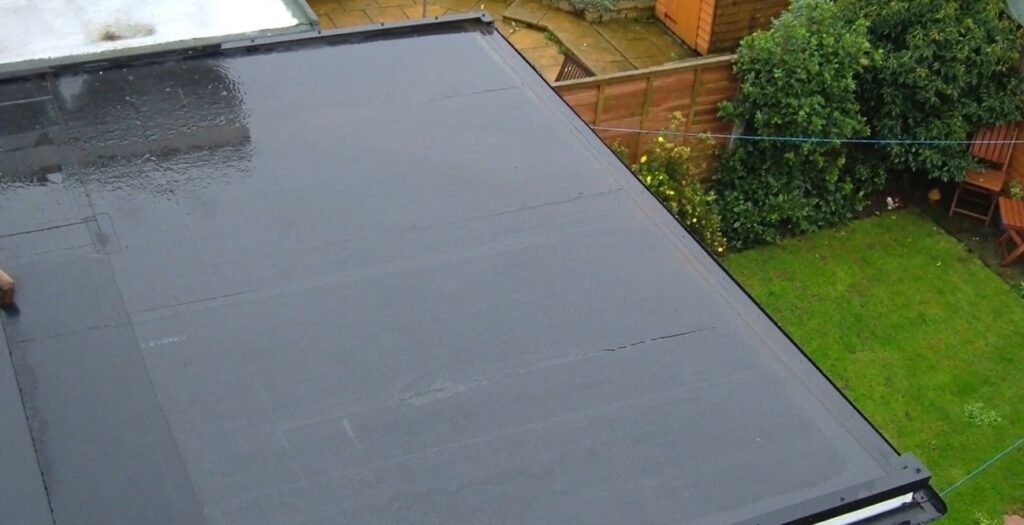
Flat roofs in Northolt and Weybridge typically last 10 to 30 years, depending on material choice, installation quality, and ongoing maintenance. Felt roofing systems average 10–15 years, EPDM rubber roofs can last 20–30 years, and fibreglass (GRP) systems often reach 25–30 years with proper care. Data shows that regular inspections and maintenance can extend lifespan by up to 40%, while neglect can reduce it by half. For homeowners, real estate agents, and retail property managers, understanding these variables is key to planning repairs, budgeting replacements, and protecting property value.
Understanding Flat Roof Lifespan: The Data Behind It
Flat roofs are widely used across Northolt and Weybridge, particularly in extensions, garages, and commercial properties. Unlike pitched roofs, they are more exposed to standing water, UV radiation, and thermal movement.
According to general construction principles outlined in Flat Roof – Wikipedia, flat roofs require specific materials and drainage strategies to maintain durability over time. Additionally, UK building guidance from the Planning Portal emphasizes the importance of proper installation and maintenance for long-term performance.
Average Lifespan by Material
Material Type | Average Lifespan | Maintenance Level |
Felt Roofing | 10–15 years | High |
EPDM Rubber | 20–30 years | Low |
Fiberglass (GRP) | 25–30 years | Medium |
Modified Bitumen | 15–25 years | Medium |
Key Insight
Material choice alone can double the lifespan of a flat roof, making it one of the most important decisions in roofing projects.
Flat Roof Lifespan in Northolt vs Weybridge
While materials are consistent, location-specific factors influence durability.
Northolt Conditions
- Higher urban density
- Pollution and debris accumulation
- Increased wear from surrounding structures
Weybridge Conditions
- More open residential layouts
- Slightly lower pollution levels
- Better airflow and drainage conditions
Data Insight
Flat roofs in less congested environments (like parts of Weybridge) can last 10–15% longer due to reduced environmental stress.
What Affects Flat Roof Lifespan?
Flat roof longevity is influenced by several measurable factors.
1. Installation Quality
Poor installation is one of the leading causes of early failure.
- Incorrect sealing
- Poor drainage design
- Substandard materials
Data Insight
Up to 35% of premature roof failures are linked to installation errors.
For long-term performance, professional installation—such as new roof installation—is critical.
2. Drainage Efficiency
Flat roofs rely on effective drainage systems to prevent water pooling.
- Blocked outlets
- Poor slope design
- Debris buildup
Impact
Standing water can reduce roof lifespan by 30–50%.
Regular maintenance through roofing services helps ensure proper drainage.
3. Weather Exposure
In West London, roofs face:
- Frequent rainfall
- Occasional frost
- UV exposure during summer
Effect
Repeated expansion and contraction weaken materials over time.
4. Maintenance Frequency
Routine maintenance is one of the most significant lifespan factors.
Data Insight
- Annual inspections extend lifespan by up to 40%
- Neglected roofs often fail within 50–60% of expected lifespan
Services like pressure washing help remove debris and prevent moisture retention.
5. Structural Support and Surrounding Elements
Flat roofs are connected to other building components.
- Chimneys
- Parapet walls
- Brickwork
Poor condition in these areas can affect the roof.
For example, deteriorating mortar may require repointing work to prevent water ingress.
Signs Your Flat Roof Is Nearing the End of Its Lifespan
Recognising early warning signs helps avoid costly replacements.
Common Indicators
- Cracks or blistering on the surface
- Standing water after rainfall
- Interior leaks or damp patches
- Peeling coatings or membrane damage
Data Insight
Early intervention can reduce repair costs by up to 60% compared to full replacement.
Cost Analysis: Repair vs Replacement
Understanding cost differences helps with decision-making.
Average Costs in Northolt & Weybridge
- Minor repairs: £150 – £800
- Moderate repairs: £800 – £2,500
- Full replacement: £1,500 – £5,000+
Key Insight
If repair costs exceed 40–50% of replacement cost, full replacement is usually more cost-effective.
Lifecycle Planning: A Data-Driven Approach
Flat roofs should be managed proactively.
Recommended Timeline
- Year 1–5: Minimal maintenance
- Year 5–15: Regular inspections and minor repairs
- Year 15+: Increased monitoring and potential replacement planning
Budget Strategy
Allocate 1–3% of property value annually for maintenance, including roofing.
Energy Efficiency and Flat Roof Performance
Flat roofs directly impact energy efficiency.
Key Factors
- Insulation quality
- Ventilation systems
- Surface reflectivity
Data Insight
Upgrading insulation during roof replacement can reduce energy costs by 20–30%.
Additional improvements, such as exterior and interior painting, can enhance thermal performance and property aesthetics.
Preventative Maintenance Checklist
A simple checklist can extend roof lifespan significantly.
Quarterly Checks
- Clear debris and leaves
- Inspect drainage outlets
- Check for visible damage
Annual Checks
- Professional inspection
- Minor repairs and resealing
- Cleaning and surface treatment
Choosing the Right Roofing Provider
Selecting a reliable contractor ensures long-term performance.
What to Look For
- Experience with flat roofing systems
- Knowledge of local property types
- Transparent pricing and timelines
- Ability to provide multiple services
Working with a trusted provider like Professional Roofing Specialist ensures consistency across installation, repair, and maintenance.
Data Insight: Why Flat Roofs Fail Early
Analysis of roofing failures highlights common causes:
- 35% installation errors
- 25% lack of maintenance
- 20% drainage issues
- 20% material degradation
Key Takeaway
Most failures are preventable with proper planning and maintenance.
Flat Roof Lifespan and Property Value
For Homeowners
- Reduces unexpected repair costs
- Improves living comfort
- Extends property lifespan
For Real Estate Agents
- Strengthens survey results
- Increases buyer confidence
- Reduces negotiation risks
For Retail Property Managers
- Minimises operational disruption
- Protects inventory and interiors
- Supports long-term planning
Conclusion
Flat roof lifespan is not fixed—it is shaped by material choice, installation quality, and ongoing maintenance. In Northolt and Weybridge, where environmental conditions and property types vary, a data-driven approach provides the clearest path to long-term performance.
By understanding lifespan benchmarks, monitoring key risk factors, and investing in preventative care, property owners can extend roof durability, reduce costs, and maintain structural integrity. Whether managing a residential home or a commercial property, proactive roofing decisions consistently deliver better outcomes than reactive repairs.
One Response